2026

Thickness-dependent polymorphism in DNTT thin films

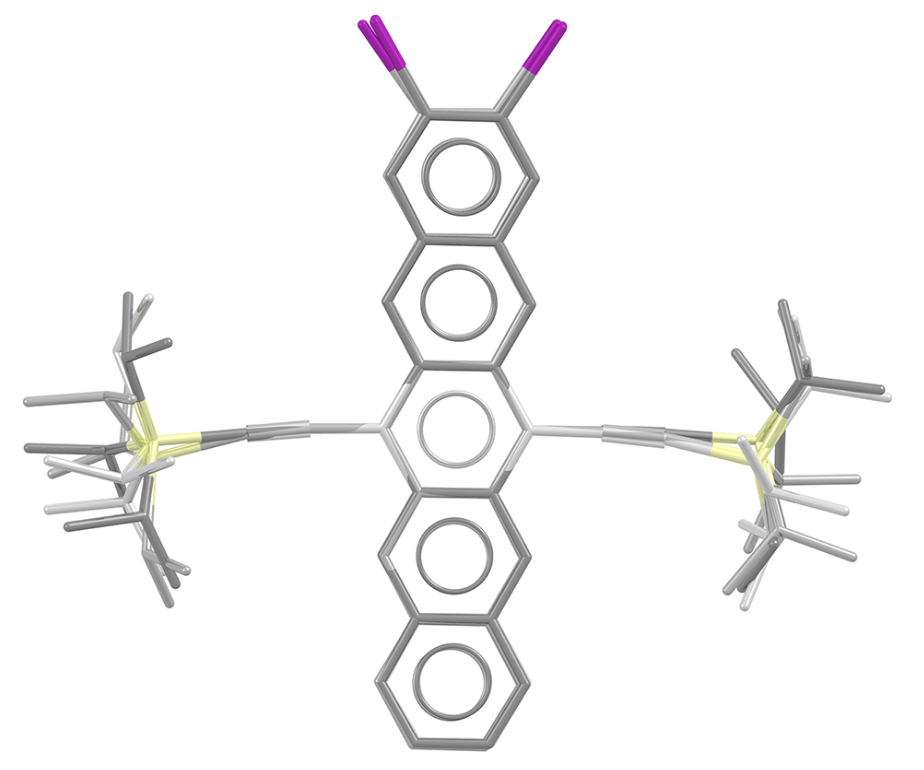
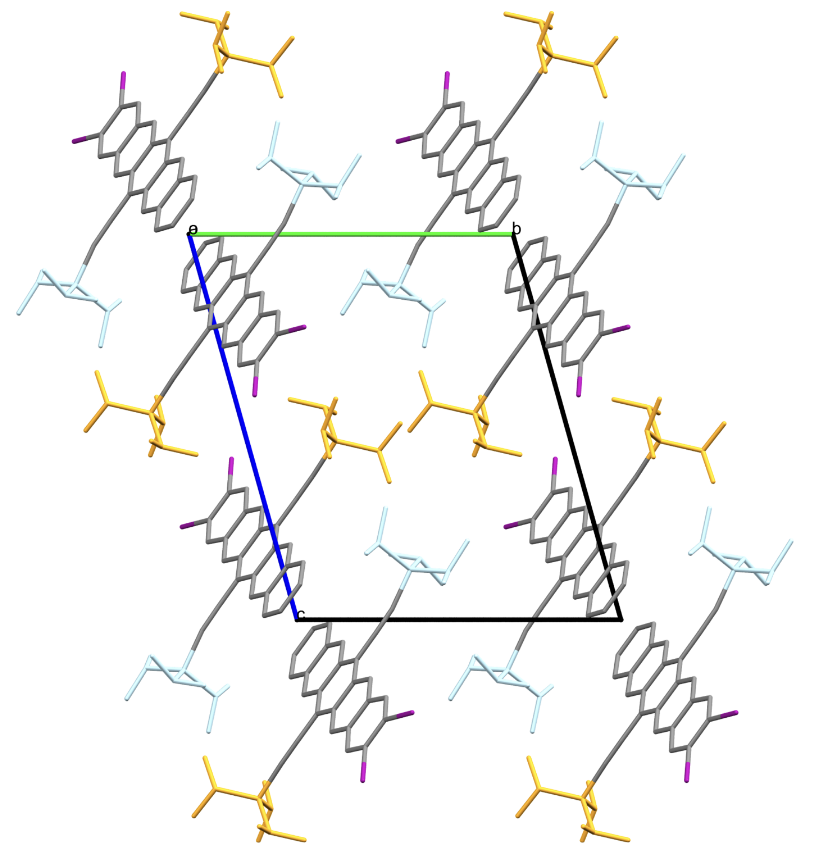
N. Shioya, F. Gasser, N. Strasser, E. Zojer, R. Resel, J. Simbrunner, T. Hasegawa (2026). From Monolayer to Bulk: Thin-Film-Specific Polymorphic Transitions of a Molecular Semiconductor. Chemistry of Materials.

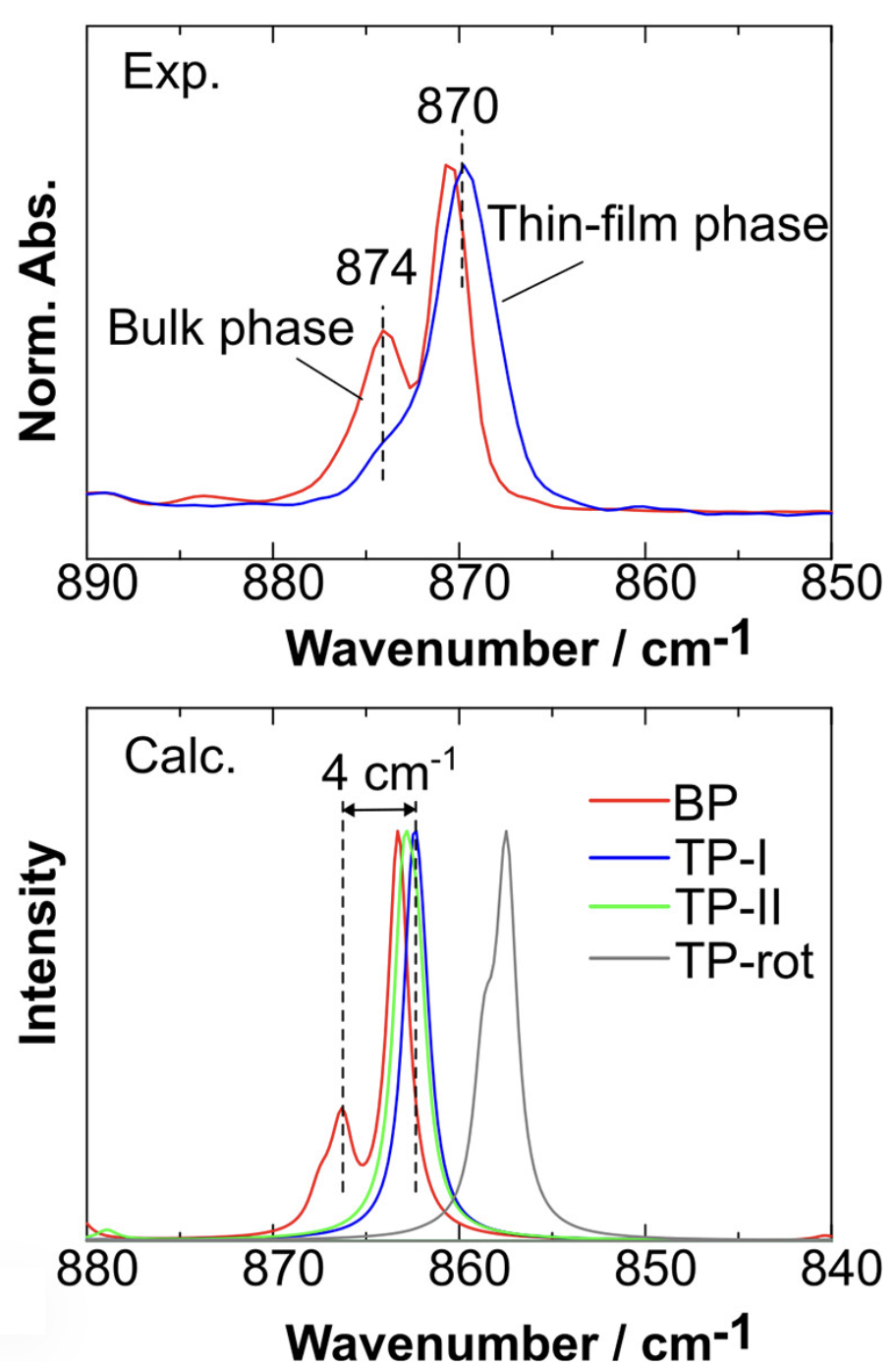
This work reveals thickness-dependent polymorphic transitions in vapor-deposited films of the organic semiconductor dinaphtho[2,3-b:2′,3′-f]thieno[3,2-b]thiophene (DNTT), identifying three distinct structural phases: monolayer, thin-film, and bulk. By combining high-resolution infrared Brewster-angle transmission spectroscopy, grazing-incidence X-ray diffraction, and density functional theory calculations, the crystal structures of both the monolayer and thin-film phases are determined. The results demonstrate that thin-film-specific polymorphism can remain hidden to conventional characterization techniques.

Organic semiconductors Thin-film polymorphism Grazing-incidence X-ray diffraction Infrared spectroscopy Density functional theory
Spin–phonon coupling and phonons in porphyrin-based MOFs

Y. Suzuki, N. Strasser, R. Sakamoto, M. Yamashita (2026). Insights Into Phonons and Spin-Lattice Relaxation in Copper(II) and Vanadyl(IV) Porphyrin Metal-Organic Frameworks From Density Functional Theory. Physical Chemistry Chemical Physics 28, 2858.

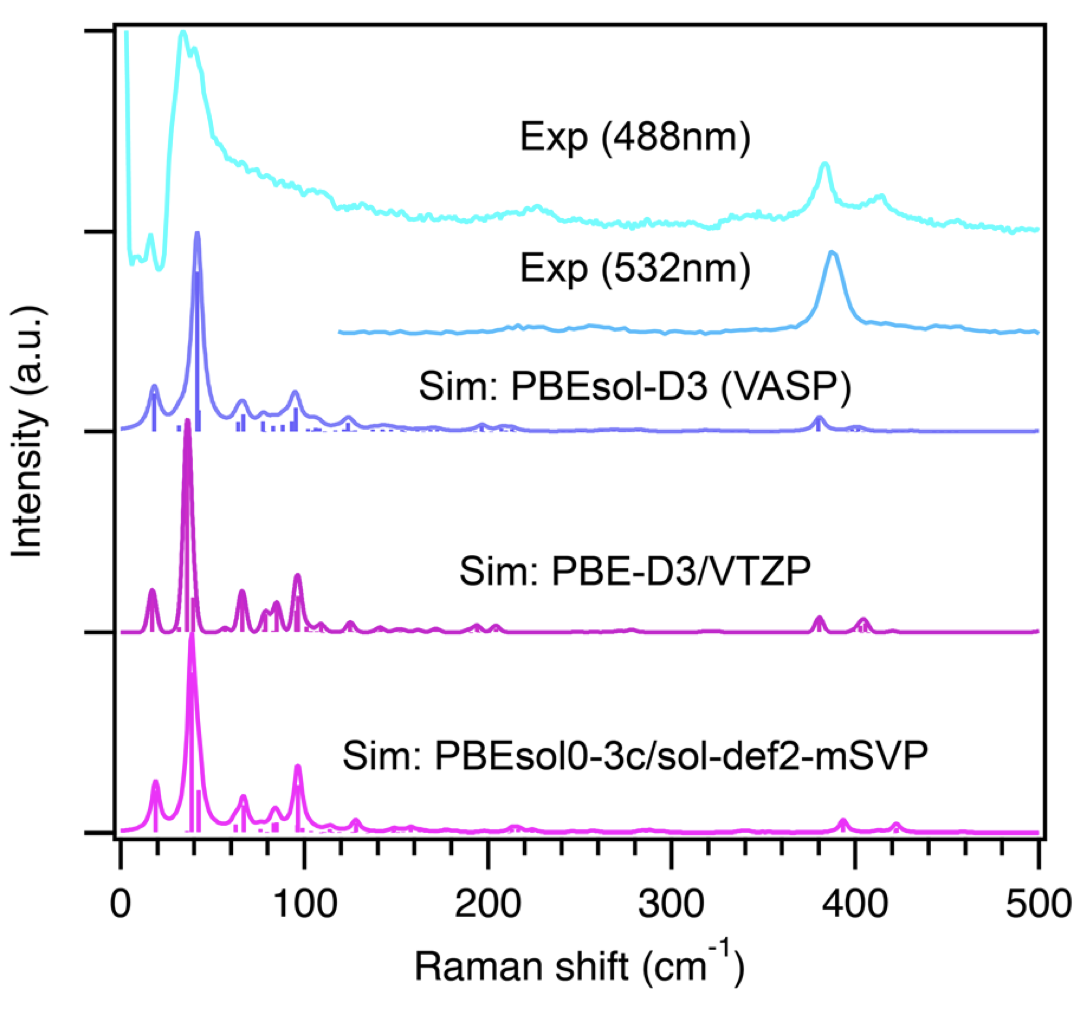
This work provides a detailed computational analysis of spin-phonon coupling mechanisms governing spin-lattice relaxation in porphyrin-based molecular crystals and their metal-organic framework analogues. Periodic density functional theory is combined with Raman spectroscopy to identify vibrational modes and to quantify first- and second-order spin-phonon coupling contributions.

Spin-phonon coupling Molecular spin qubits Metal-organic frameworks Density functional theory Raman spectroscopy

2025

Thermal expansion of GUT-2 influenced by pore-confined water

N. Strasser, B. Schrode, A. Torvisco, S. John, B. Kunert, B. Bitschnau, F. P. Lindner, C. Slugovc, E. Zojer, R. Resel (2025). Influence of Pore-Confined Water on the Thermal Expansion of a Zinc-Based Metal-Organic Framework. Journal of Materials Chemistry C 13, 17353.

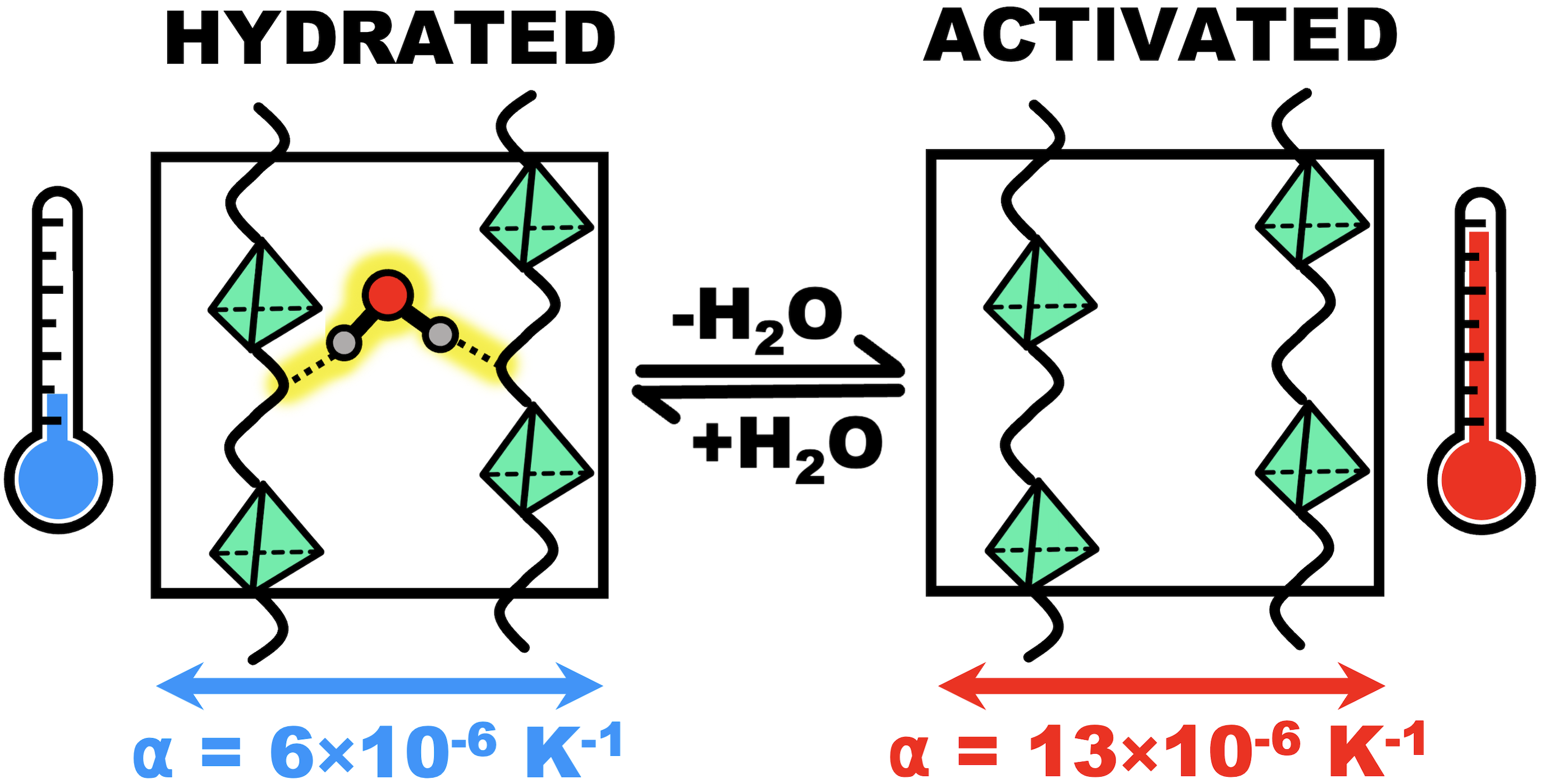
This work investigates how pore-confined water molecules modulate the anisotropic thermal expansion of the zinc-based metal-organic framework GUT-2. By combining temperature-dependent single-crystal and powder X-ray diffraction with Rietveld analysis, reversible hydration-dehydration processes are correlated with directional bonding motifs within the framework. The results reveal a clear link between the nature of chemical interactions (covalent, hydrogen bonding, van der Waals) and the magnitude of thermal expansion, demonstrating how guest molecules can be used to tune framework properties.

Metal-organic frameworks Thermal expansion Host-guest interactions Hydration dynamics X-ray diffraction Avrami equation
Structure and texture determination of Cu2(bdc)2(dabco) MOF thin films

M. Fratschko, N. Strasser, N. Taghizade, M. Linares-Moreau, J. C. Fischer, T. Zhao, I. A. Howard, P. Falcaro, E. Zojer, R. Resel (2025). Identifying Structure and Texture of Metal-Organic Framework Cu2(bdc)2(dabco) Thin Films by Combining X-ray Diffraction and Quantum Mechanical Modeling. Crystal Growth & Design 25, 3665–3679.

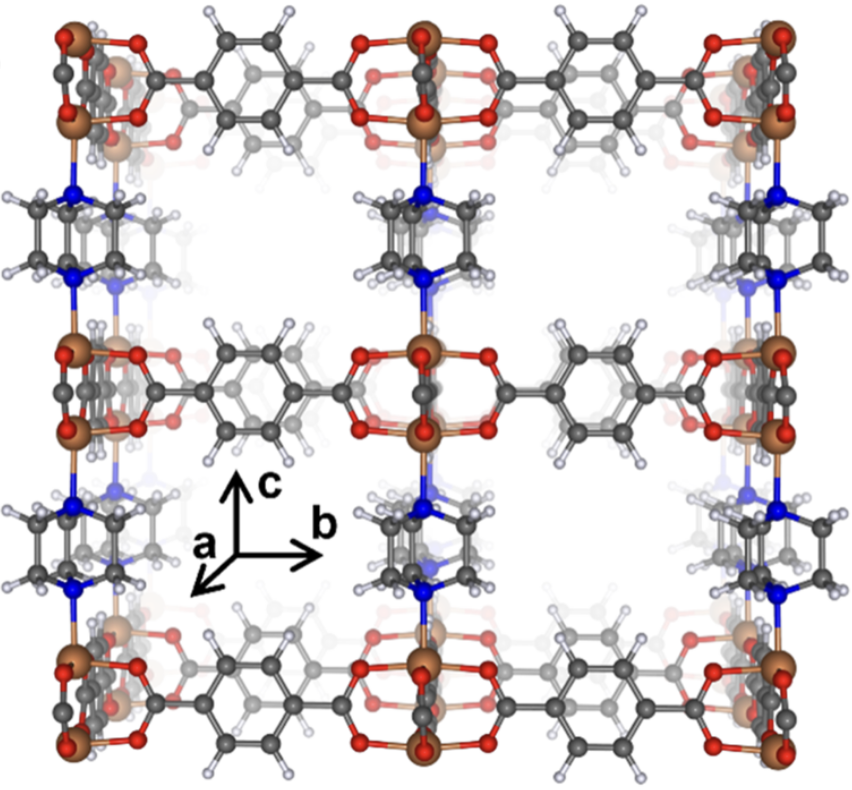
This work presents a combined experimental and theoretical strategy to unambiguously determine both crystal structure and texture of highly oriented metal-organic framework thin films. Density functional theory is used to derive and validate a structural model, which is confirmed by comparing simulated and measured grazing-incidence X-ray diffraction patterns and infrared spectra.

Metal-organic frameworks Thin films Grazing-incidence X-ray diffraction Texture effects Computational modeling
Paper 6

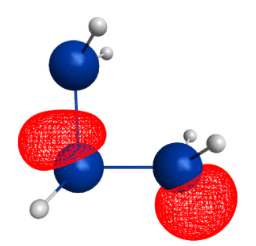
N. Strasser and A. F. Sax (2025). Chemical Bonding in Three-Membered Ring Systems. Molecules 30, 612.

This study investigates chemical bonding and reaction pathways in three-membered ring systems (cyclopropane and silicon-containing analogues) by modeling addition/elimination reactions of methylene and silylene to/from ethene, disilene, and silaethene. Using CASSCF calculations combined with an orthogonal valence bond analysis, the work reveals local charge/spin redistribution effects. The analysis provides a mechanistic picture of when barrierless vs. discontinuous pathway changes occur as symmetry is varied.

DOI PDF SI
Chemical bonding Orthogonal valence bond Diabatic/adiabatic pathways Methylene & silylene Cyclopropane analogues
Brillouin light scattering and machine-learned potentials for MOFs

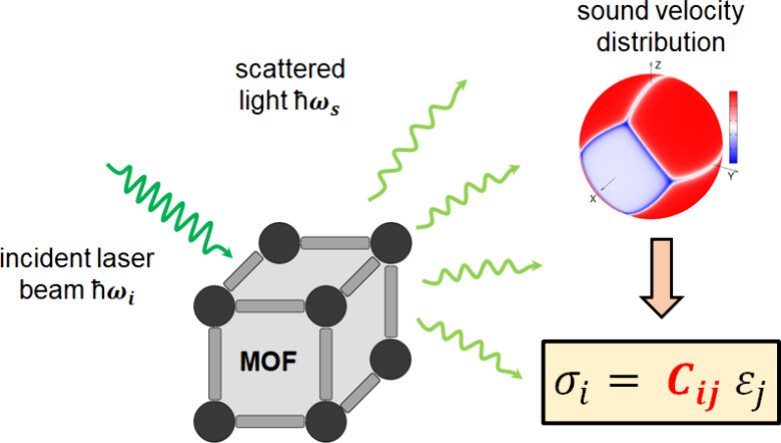
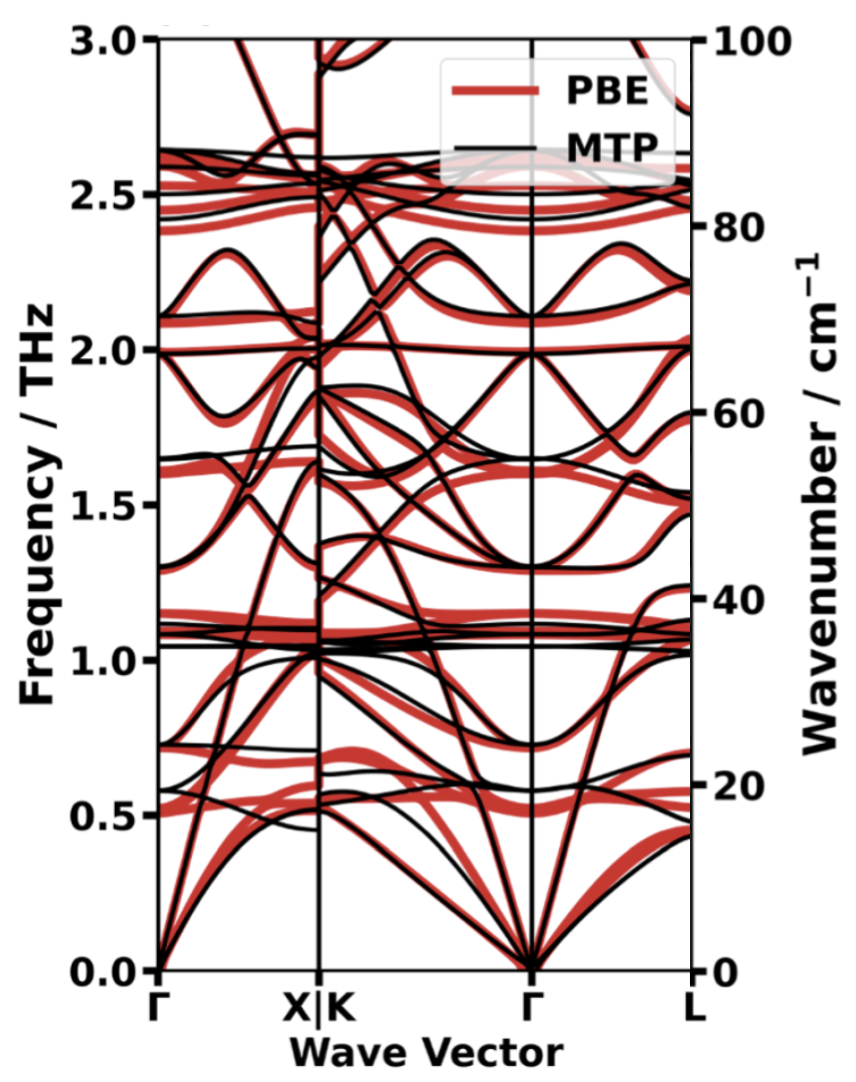
F. P. Lindner, N. Strasser, M. Schultze, S. Wieser, C. Slugovc, K. Elsayad, K. J. Koski, E. Zojer, C. Czibula (2025). Combining Brillouin Light Scattering Spectroscopy and Machine-Learned Interatomic Potentials to Probe Mechanical Properties of Metal-Organic Frameworks. The Journal of Physical Chemistry Letters 16, 1213–1220.

This work combines Brillouin light scattering spectroscopy with state-of-the-art atomistic simulations to determine anisotropic elastic properties of a newly synthesized metal-organic framework at the single-crystal level. Machine-learned interatomic potentials are employed to efficiently simulate elastic tensors and phonon band structures with near first-principles accuracy, enabling a direct interpretation of the experimental Brillouin spectra.

Brillouin light scattering Mechanical properties Metal-organic frameworks Machine learning Phonons

2024

Graphical abstract or key figure for the spin-dependent phonon band structures of HKUST-1

L. Hunnisett et al. (2024). The Seventh Blind Test of Crystal Structure Prediction: Energy Ranking Methods. Acta Crystallographica Section B 80.

This article reports the results of the second phase of the international crystal structure prediction blind test, focusing on the accurate energetic ranking of experimentally observed polymorphs. I contributed as part of Group 3, where we applied an embedding-based ranking strategy developed in the group of A. D. Boese. The approach combines PBE0+MBD calculations for molecular multimers embedded into periodic PBE+MBD environments and was used consistently for both electronic energies and free energies. Using this methodology, four target polymorphs were correctly ranked first, while seven out of nine experimental polymorphs were placed within the top five predicted structures, demonstrating the high accuracy of the employed ranking protocol.

Benchmark study Energy ranking Computational methods Polymorphism
Graphical abstract or key figure for the spin-dependent phonon band structures of HKUST-1

L. Hunnisett et al. (2024). The Seventh Blind Test of Crystal Structure Prediction: Structure Generation Methods. Acta Crystallographica Section B 80.

This work reports the results of the first phase of an international blind test assessing current computational strategies for crystal structure prediction. I contributed as part of Group 3 by applying a multi-step structure-generation protocol. Starting from molecular conformers, trial crystal structures were generated in common space groups with different numbers of molecules per unit cell, leading to millions of candidate structures. These were iteratively optimized using increasingly accurate computational methods and subsequently energy-ranked to identify the most promising crystal packings.

DOI PDF SI
Benchmark study Crystal structure prediction Computational methods Polymorphism
Graphical abstract or key figure for the spin-dependent phonon band structures of HKUST-1

N. Strasser, S. Wieser, E. Zojer (2024). Predicting Spin-Dependent Phonon Band Structures of HKUST-1 Using Density Functional Theory and Machine-Learned Interatomic Potentials. Int. J. Mol. Sci. 25, 3023.

We explore the impact of magnetic spin configurations on the vibrational (phonon) properties of the prototypical metal-organic framework HKUST-1 using dispersion-corrected density functional theory and assess the capability of moment tensor potentials to reproduce these spin-dependent phonon features with high quantitative accuracy.

Phonons Infrared spectroscopy Machine learning Metal-organic frameworks Spin state Density functional theory

2018

Graphical abstract or key figure for the 4-aminobutanol–water complex study

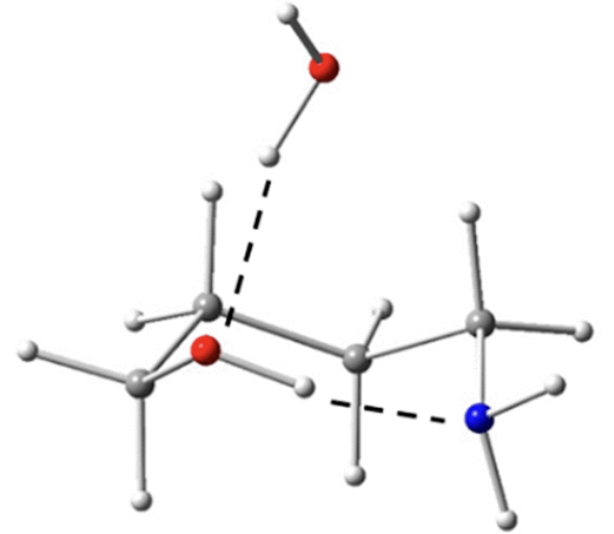
J. A. Hohl, M. W. Harris, N. Strasser, A.-M. Kelterer, R. J. Lavrich (2018). Competing Intramolecular Hydrogen Bond Strengths and Intermolecular Interactions in the 4-Aminobutanol–Water Complex. J. Phys. Chem. A 122, 8505–8510.

This study combines high-resolution rotational spectroscopy and quantum chemical calculations to probe how intramolecular hydrogen bonding in 4-aminobutanol persists in the presence of water, and how competing intermolecular hydrogen bonds affect conformational preferences and structural parameters.

Amino alcohol Hydrogen bonding Rotational spectroscopy Intermolecular interactions Conformational analysis